
 EN
EN About RAPID-N
 Natural-hazard triggered technological accidents (Natechs) involving the releases of hazardous substances, fires, and explosions at critical chemical infrastructures have been recognized as an emerging risk. Natech risks are expected to increase in the future due to the growing number of critical infrastructures, more natural hazards due to climate change, and the vulnerability of the society which is becoming more and more interconnected.
Resources
How to use RAPID-N (Necci and Krausmann, 2022)
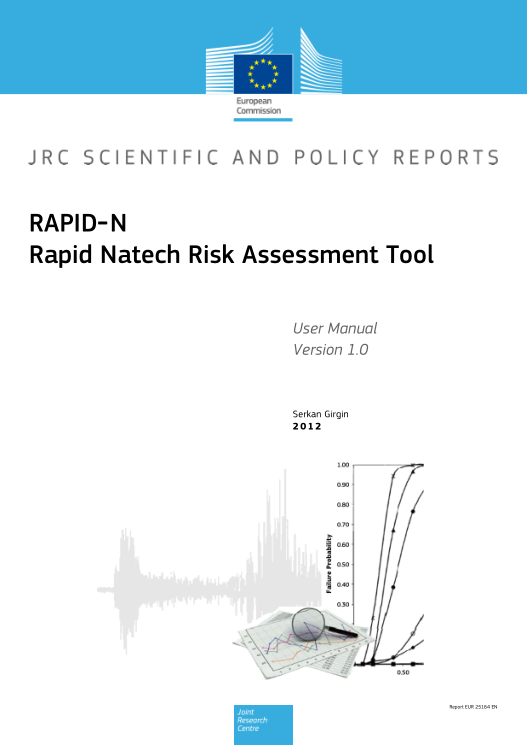
RAPID-N User's Manual (Girgin, 2011)
These documents aim to provide basic information about the implementation and use of RAPID-N. They describe the technical details and components of the system, and provide information on calculation methods and algorithms. They also include short tutorials that guide users through RAPID-N risk assessment case studies with different levels of complexity. Short tutorial examples are also presented in the video below.
Recent Natural Hazards
| Date | Time | Name | Hazard Parameters | ||||
|---|---|---|---|---|---|---|---|
| 2026/04/13 | 02:15:01 | 154 km W of Neiafu, Tonga | Mw: 5.5; h: 254.58 km | ||||
| 2026/04/08 | 09:05:36 | 64 km SSE of Sovetabad, Azerbaijan | Mw: 5.6; h: 10 km | ||||
| 2026/04/06 | 11:18:37 | Pacific-Antarctic Ridge | Mw: 5.9; h: 10 km | ||||
| 2026/04/05 | 13:22:15 | south of the Kermadec Islands | Mw: 5.5; h: 10 km | ||||
| 2026/04/04 | 10:34:31 | 90 km SE of Sarangani, Philippines | Mw: 6; h: 99.568 km | ||||
| 2026/04/04 | 17:14:58 | 4 km ENE of Hualien City, Taiwan | Mw: 5.2; h: 29.676 km | ||||
| 2026/04/04 | 01:35:00 | 111 km ESE of Bitung, Indonesia | mb: 5.9; h: 48.684 km | ||||
| 2026/04/04 | 18:26:13 | 77 km SSW of Yulara, Australia | Mw: 5.5; h: 10 km |